Defense Obsolescence Management: Escaping Legacy Gaps

Key Takeaways
The defense industry is reaching a critical tipping point. Original Equipment Manufacturers (OEMs) and primes face a systemic, compounding burden: maintaining complex, aging platforms while under immense pressure to accelerate New Product Introduction (NPI). This operational tension drains capital, monopolizes engineering talent and compromises long-term innovation.
At its core, the problem is a direct conflict between the exceptionally long service life of military platforms, which routinely last 25 years or more, and the rapid obsolescence cycles of commercial off-the-shelf (COTS) electronic components, which typically span just five to seven years. When engineers are constantly pulled into reactive firefighting to keep a legacy product operational, they cannot focus on next-generation development.
The Interconnected Triple Burden: Finance, Knowledge and Certification
Sustaining legacy systems places three distinct, compounding pressures on defense organizations:
- Escalating Life Cycle Costs: Managing component degradation across aging fleets is an immense financial drain. Non-recurring engineering (NRE) costs linked to aircraft obsolescence alone are estimated to cost the global defense sector between $50 billion and $70 billion.
- Shifting Workforce Dynamics: The industry faces an imminent talent cliff, with up to 29% of the aerospace and defense workforce currently eligible for retirement. As these senior specialists exit, organizations lose decades of undocumented tribal knowledge. Vital design data often vanishes with them, leaving behind incomplete schematics and unrecorded engineering modifications.
- Rigorous Regulatory Compliance: Modernizing an aerospace or defense asset requires managing rigorous international regulatory frameworks, including the UK Ministry of Defense (MOD), NATO and the US Department of Defense (DoD) standards. Without an authoritative digital thread, even minor component changes can trigger a mandatory, full-scale system recertification, accumulating massive costs and multi-year delays.
Shifting from Reactive Repair to Product Life Cycle Extension
To break free from this cycle, defense primes should transition from reactive, short-term maintenance to proactive sustainment. When original documentation is missing, altered or obsolete, Plexus delivers comprehensive aftermarket services focused on product life cycle extension.
Through systematic engineering analysis, engineers can deconstruct legacy assemblies, map signal dependencies and rebuild missing documentation from physical hardware. This deep technical investigation establishes a reliable baseline of design data, allowing organizations to treat an old asset as a sustainable product capable of controlled, future updates. Rather than executing hasty component swaps that create secondary supply chain issues, this disciplined baseline approach ensures that every modification protects the structural integrity of the wider system architecture.
Can We Update Legacy Systems Without Full Recertification?
Modernizing legacy systems without triggering a complete platform overhaul requires isolating changes to specific subsystems. The most efficient path to legacy system modernization is not a complete, top-down system redesign. Complete overhauls require exhaustive recertification, which amplifies engineering risk and delays deployment. Instead, a targeted approach limits the scope of verification to the specific subsystem undergoing modification.
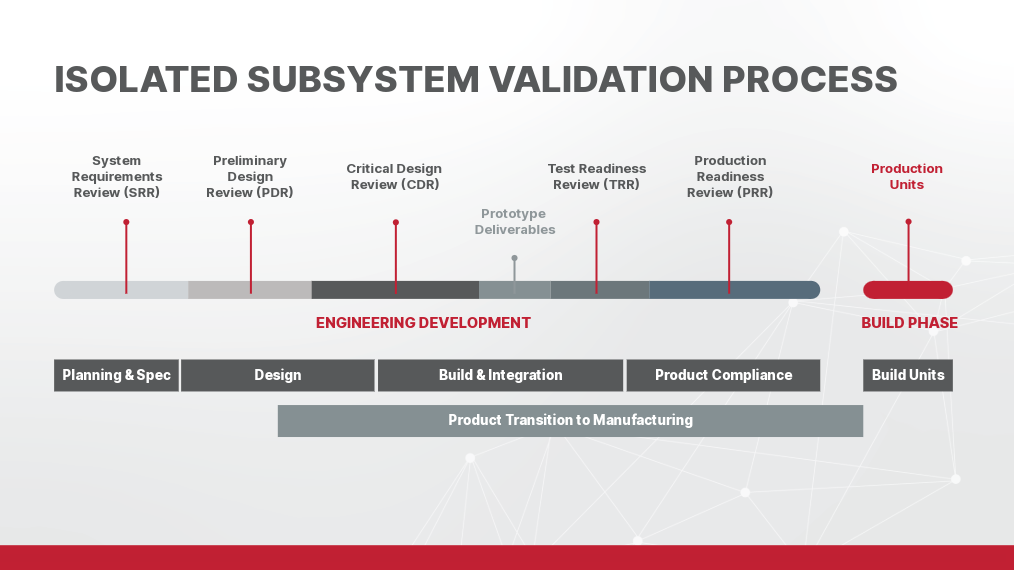
By applying a disciplined life cycle gate process, moving methodically from System Requirements Review (SRR) through Preliminary Design Review (PDR) and Critical Design Review (CDR), engineering teams can isolate modifications. This ensures that only the modified sub-assemblies face rigorous testing, leaving the broader, pre-certified platform architecture untouched.
Case Study: Subsystem Modernization in Action
When a core communications processor within a deployed military vehicle intercom system faced critical component obsolescence, production lines were threatened with immediate disruption. A complete system overhaul would require multi-year, platform-level recertification.
The Challenge: Bypass a total system redesign while protecting the broader platform architecture from mandatory recertification.
The Plexus Solution: Our engineering team designed a custom daughterboard interface module. Utilizing a modern, readily available processor, this self-contained module provided an exact form, fit and functional replication of the obsolete component, confining the testing and verification scope entirely to the interface itself.
The Result: The strategic remediation bypassed full-platform recertification, completed development in just nine months, and extended the product’s life by over a decade.
Supply Chain Resiliency: Mitigate Risk with Real-Time Analytics
True obsolescence management requires combining rigorous engineering with predictive supply chain analytics. Siloed engineering choices often lead to long-term procurement challenges if components are selected without considering future availability.
Advanced predictive tools, such as DRIVE analytics and the ALARM™ lifecycle risk assessment tool, allow Plexus’ supply chain teams to monitor component lifecycles in real time. This data enables our teams to anticipate end-of-life notices long before they disrupt production.
Integrating DFM principles early in the remediation process ensures that replacement components are selected for both their performance and their long-term supply stability. By evaluating manufacturing tolerances, component lead times and second-source availability during the design phase, primes can mitigate supply chain friction and build resilient, long-term support models.
Redirecting Capital for Next-Generation Innovation
Every hour an engineer spends reverse-engineering an obsolete circuit board is an hour lost on new product development. Outsourcing the technical burden of sustainment to a trusted operational partner allows defense primes to reallocate their internal talent to high-value, next-generation innovation.
At Plexus, engineering services is fundamental to our identity. We partner with defense leaders to transform legacy maintenance from a reactive, unpredictable expense into a disciplined, strategic advantage. Our global expertise across Design & Development, Supply Chain solutions and specialized Sustaining Services ensures your complex legacy products remain mission-ready, allowing your team to focus confidently on designing the future.
Ready to protect your legacy assets and accelerate your NPI roadmap?
Contact the Plexus team today to discuss a customized obsolescence strategy for your complex defense systems.