The Foundation of Quality: Integrated Test and Inspection
In highly regulated industries like Healthcare and Aerospace, there is no margin for error. When a diagnostic imaging suite needs to capture a life-saving image or a flight control system operates in extreme conditions, acceptable quality is not an option. For Original Equipment Manufacturers (OEMs), the challenge lies in ensuring that every product leaving the facility is free of defects. This is a task that is increasingly complex as electronics become more miniaturized and sophisticated.
Traditionally, legacy manufacturing models treated quality control as a gate at the end of the line – a final hurdle to clear before shipping. However, this reactive approach is fundamentally flawed in the context of modern electronic manufacturing services. Discovering a defect at the final stage often leads to unexpected scrap expenses and elevated risk of latent field failures. To achieve true reliability, manufacturing process should evolve beyond simple assembly.
At Plexus, we believe that quality is not a final step, but a foundation. By using integrated test and inspection, we build quality directly into the manufacturing process, ensuring that quality is built directly into every assembly from the very first solder joint. This proactive philosophy shifts the focus from catching errors to preventing them, creating an ideal stream of value that protects complex products throughout their entire life cycle.
How Does Design for Excellence (DFX) Prevent Manufacturing Defects?

The journey toward a zero-defect product begins long before the first component is placed on a circuit board. A proactive design phase serves as the foundation where teams establish true quality. Through our Design for Excellence (DFX) prevents manufacturing defects by evaluating board layouts and test point coverage early in the development cycle before full-scale assembly begins. Through our Design for Excellence (DFX) and Design for Test (DFT) protocols, Plexus engineers work alongside customers to optimize products for the manufacturing environment.
By applying our proprietary DFX ruleset, we analyze a design to ensure maximum test coverage. We ask the critical questions early:
- Are there sufficient test points for In-Circuit Testing (ICT)?
- Is the layout optimized for Automated Optical Inspection (AOI)?
By identifying potential manufacturing hurdles during the design and development stage, we reduce the “Total Cost of Quality,” preventing the compounding costs of discovering a design flaw during full-scale production.
The Four Pillars of Integrated Test and Inspection
A comprehensive quality strategy requires a multi-layered approach. In contract manufacturing, relying on a single inspection point is insufficient for complex products. Plexus employs four core test services that, when integrated, create an extensive safety net for mission-critical technology.
1. Inspection Services: Seeing the Unseen
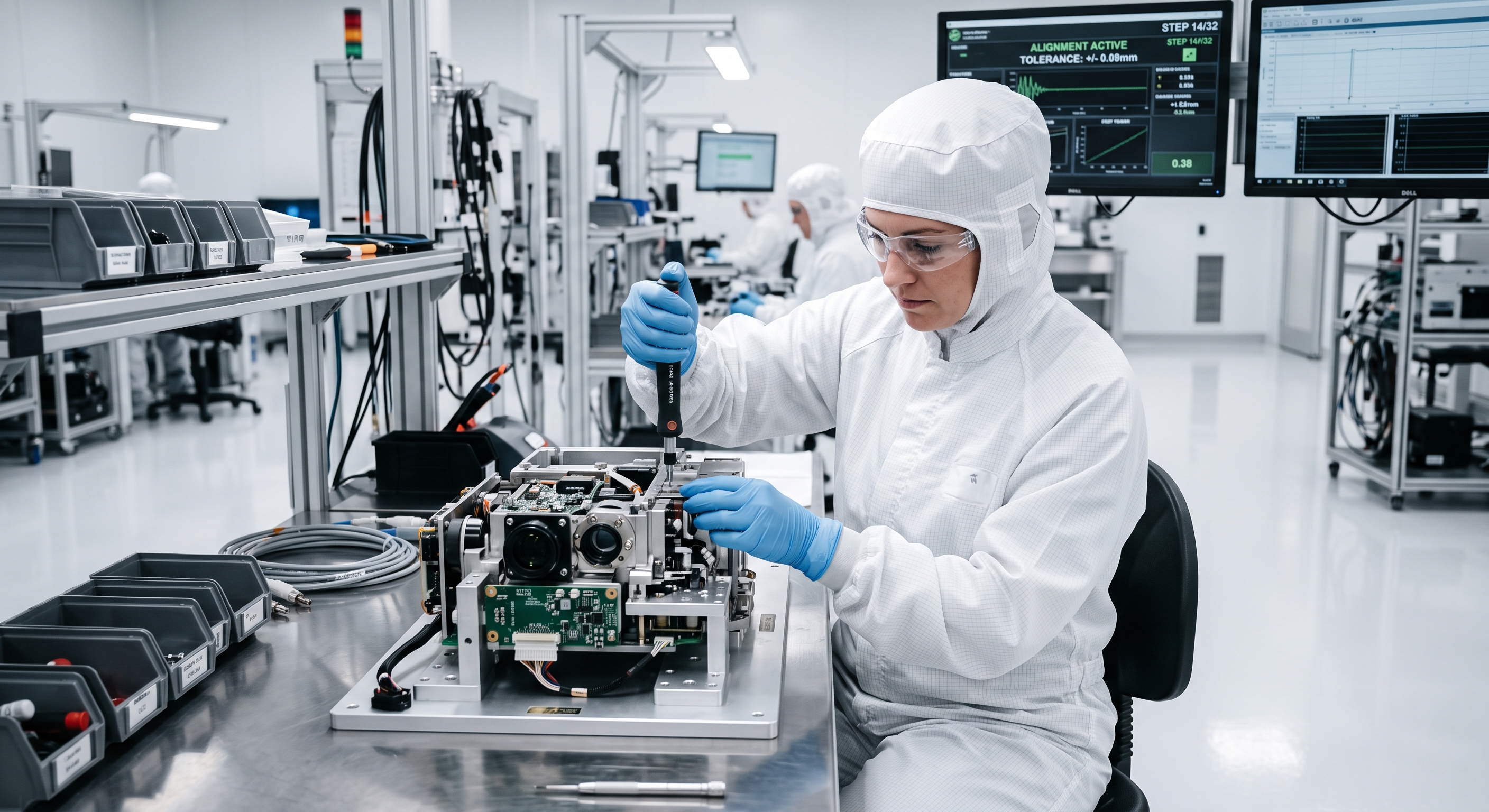
As components shrink to microscopic scale, manual visual inspection is no longer a viable primary defense. We utilize a suite of high-speed, automated inspection technologies to verify the structural integrity of every assembly.
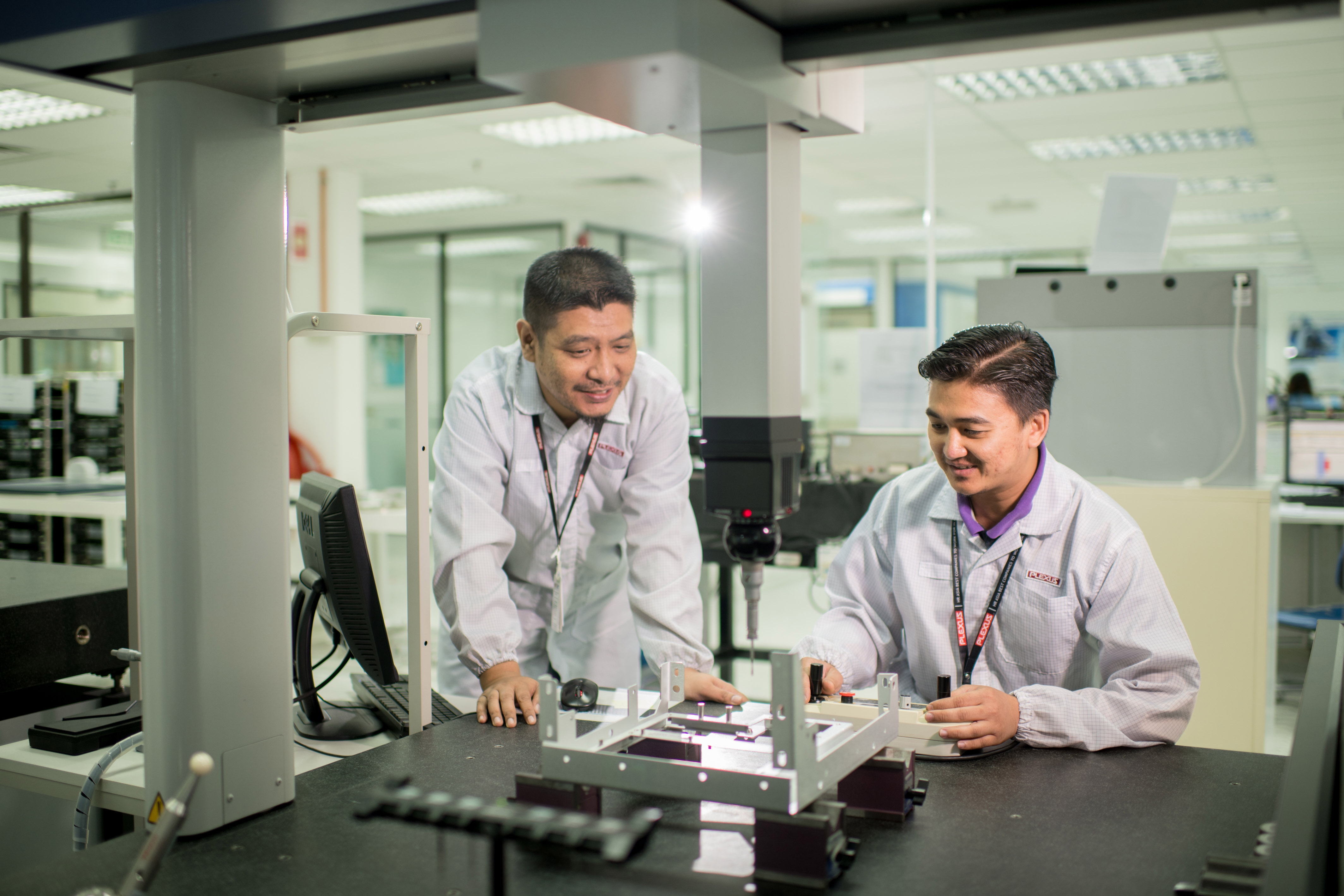
- Automated Optical Inspection (AOI): Our 3D AOI systems use high-resolution cameras and sophisticated algorithms to inspect component placement, polarity and solder joint quality at speeds the human eye cannot match.
- 3D X-ray Inspection (AXI): For modern electronics utilizing Ball Grid Arrays (BGAs) and hidden solder joints, we use X-ray technology to look through components. This allows us to detect internal voiding, bridging or insufficient solder that would otherwise remain hidden until a failure occurs in the field.

2. Functional and Electrical Testing: Verifying Performance
Once teams verify the physical structure, the next objective is confirming the product performs its intended electrical function. This stage transitions from verifying structural attributes to validating comprehensive functional performance.
- In-Circuit Testing (ICT) and Flying Probe: These methods verify the individual components on the board, checking for shorts, opens and correct resistance or capacitance values.
- Functional Test (FCT) Setups: Our teams develop custom FCT environments that simulate the real-world conditions the device will inhabit. By exercising the product’s hardware and software together, we confirm that the system meets its specific performance requirements before it leaves our facility.
3. Reliability and Failure Analysis: Engineering for the Extreme
In markets like Aerospace, Industrial or Semiconductor Capital Equipment, a product must survive years of vibration, moisture and thermal cycling. Rather than testing only for immediate performance, our teams validate the product’s entire lifespan.
- Environmental Stress Screening: We utilize HALT (Highly Accelerated Life Test) and HASS (Highly Accelerated Stress Screening) to push products to their breaking points. By subjecting assemblies to extreme temperatures and multi-axis vibration, we uncover latent defects that might only surface after years of use.
- Root Cause Diagnosis: When our teams detect a failure, the Failure Analysis Lab takes over. Using tools like scanning electron microscopy, we perform a deep-dive at the board and system levels to identify why a failure occurred. This allows us to implement design or process changes that prevent the issue from ever recurring.
4. Quality and Traceability Management: Ensuring Compliance
Within the highly regulated Healthcare and Defense sectors, the empirical data supporting a product carries as much significance as the physical assembly itself. We maintain rigorous record-keeping to ensure absolute compliance, upholding the industry standard that ‘if it is not documented, it did not occur.’
- End-to-End Traceability: Our systems maintain a digital “birth certificate” for every product. This includes a record of every component used, the specific lot codes, the operators involved and the exact results of every test performed.
- Regulatory Peace of Mind: This rigorous management ensures total compliance with stringent standards like FDA Class II and Class III or AS9100. At Plexus, we link our inspection systems to a global data network, allowing our quality teams to monitor trends in real-time and provide customers with total transparency during audits.
Proof in Action: Achieving Zero Failures
The power of these four pillars is best seen in our work solving the most demanding reliability challenges. A global leader in heavy equipment electrification recently faced a critical issue: electronic assemblies were failing in the field under harsh operating conditions.
By applying our integrated test and inspection framework, Plexus did not simply replace the parts. We used our Failure Analysis Lab to perform a deep-dive at the system level. By identifying root causes in the original design and implementing new process controls and supplier quality standards, we achieved a “zero failure” result for their critical circuits. This industrial-strength rigor is the same standard we apply to life-saving medical devices and mission-critical aerospace systems.
Why Should OEMs Partner with Plexus for Integrated Quality Testing?
In a competitive global market, quality is more than a metric, it is a strategic advantage. Choosing a partner that prioritizes these four pillars of integrated test and inspection means fewer field returns, lower warranty costs and a protected brand reputation.
At Plexus, our goal is to be more than just a provider of contract manufacturing. We aim to be a trusted extension of your engineering and quality teams. By integrating sophisticated testing protocols directly into our manufacturing DNA, we help you create the products that build a better world.
Ready to ensure the uncompromising reliability of your next complex product?
Contact our team today to learn how our integrated solutions can support your mission-critical goals.