Aftermarket Services: Beyond Repair and Refurbishment
For Original Equipment Manufacturers (OEMs) in highly regulated sectors like Healthcare, Aerospace and Defense and Industrial, every product sitting idle in a warehouse or prematurely discarded represents more than just an environmental footprint, it represents trapped capital and missed revenue opportunities.
This article is the first in a three-part series exploring how specialized Sustaining Services strategies can transform your business. Today, we focus on Aftermarket services, a core pillar of the Plexus Sustaining Services overall solution. While many view the aftermarket as a simple fix-it shop, Plexus approaches it as a strategic value-add. By transitioning to a circular manufacturing model, you can mitigate supply chain volatility and generate new, high-margin service revenue that protects your brand and the planet simultaneously.
We’ve developed four capability pillars that ensure your products remain high-performing assets throughout their entire product life cycle.
Pillar 1: Equipment Decontamination
Safety and Compliance Efficiency in Aftermarket Services
Before a unit can be analyzed, repaired or refurbished, it must be safe for our technicians. Equipment Decontamination is a tailored process for cleaning and sterilizing returned equipment to remove any operating environment contaminants or hazardous residues.
At Plexus, we recognize that “clean” means something different in every industry. For our Aerospace and Defense partners, equipment may return from the field carrying specialized chemicals or carbon buildup from flight operations. We meticulously tailor our cleaning process to ensure we handle sensitive avionics without degradation, returning the product to a “like-new” state.
In the Industrial sector, particularly for mining and plant equipment, the stakes are equally high but the contaminants differ. Equipment returned from a mining site or a chemical processing plant often carries a coating of abrasive dust, caustic residues or industrial lubricants that can interfere with sensitive electronic controls. Our decontamination protocols strip harmful particulates from these ruggedized systems to prevent premature failure during testing, ensuring even the most battle-worn plant hardware remains safe for diagnostic review.
For our Healthcare and Life Sciences partners, this is often a mandatory compliance step. By outsourcing this to Plexus, you remove the need for specialized, high-cost cleaning facilities within your own footprint. We manage the OSHA and FDA regulatory burden and ensure our team handles every unit entering the repair cycle safely and professionally.
The Impact: This streamlines the service process flow, significantly shortening the time between a product’s return from the field and its readiness for re-sale or re-deployment.
Pillar 2: Systems Diagnostics and Analysis
Protecting Your Brand and Performance
You cannot monetize a product that isn’t operating efficiently. Effective recovery starts with Systems Diagnostics and Analysis, a systematic, forensic process to identify why a unit failed and determine its most profitable path back to the field.
Plexus moves beyond a standard component-replacement model by employing a deep-tier diagnostic methodology. We understand that for complex systems, a surface-level fix is insufficient to ensure long-term reliability. Instead, we utilize a three-tiered diagnostic approach to restore every unit to its exact original specification:
- OEM Test Equipment: We utilize your proprietary tools to ensure 100% compliant, factory-level diagnostics and warranty validation.
- Off-The-Shelf (OTS) Precision Tools: We use high-grade electronic test equipment and imaging for forensic-level electrical and thermal analysis.
- Plexus Custom Fixtures: Since engineering is in our DNA, we build specialized functional test beds that simulate real-world field environments. This ensures reliability before we redeploy the product, preventing the dreaded no fault found (NFF) returns that plague many service networks.
The Impact: This forensic approach reduces unnecessary scrap and ensures your installed base remains a reliable revenue generator rather than a liability.
Pillar 3: System Level Repair and Refurbishment

Modernizing the Installed Base for New Revenue
The ultimate goal of any aftermarket strategy is to keep the installed base active, relevant and profitable. Our System Level Repair and Refurbishment services provide a path to “like-new” status that goes beyond functionality to include the total user experience.
- Refurbishment: We perform deep-level restoration, including cosmetic refreshing and housing replacements. Refurbished units become indistinguishable from new ones, protecting your brand’s premium image and allowing for secondary market sales.
- Upgrades: Leveraging our engineering expertise, we implement Engineering Change Orders (ECOs) to add new features or software updates to existing units. This allows you to sell service-related upgrades to your existing customers, creating recurring revenue without the cost of a full new-product launch.
The Impact: Refurbishing system level equipment keeps legacy systems up to date and compatible with modern automation and technologies, securing long-term service contracts and providing a significant value add to the end user.
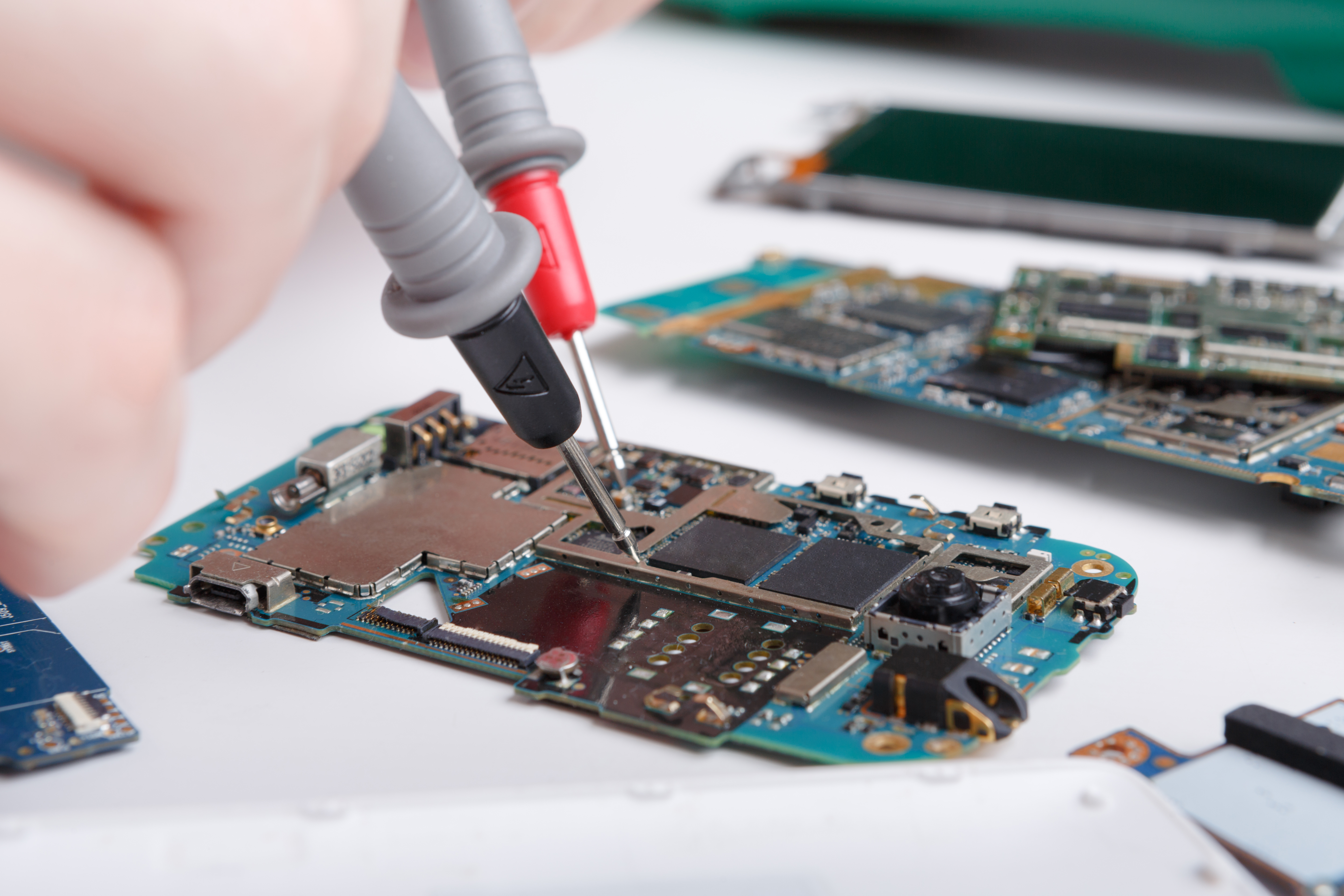
Pillar 4: PCBA Level Repair and Rework
Mitigating Supply Chain Risk and Preserving Value
In an era of component shortages and volatile lead times, the most valuable part you own is often the one already installed within your product. PCB Repair and rework are no longer just maintenance tasks; they are essential supply chain de-risking strategies.
Our PCB Repair capabilities provide rigorous technical restoration for all printed circuit board assemblies and ensure every board returns to peak operational performance. Whether it’s BGA/LGA rework or component-level modification, we restore functionality to non-conforming hardware. This provides a crucial, cost-effective alternative to purchasing new assemblies, allowing you to bypass supply chain delays and keep your service inventory healthy without the massive capital outlay of new production.
The Plexus Advantage: The DFX Feedback Loop Because Engineering is in our DNA, our involvement doesn’t end with a successful repair. We treat every repair as a data point.
By analyzing root causes of failure during the rework process, we help you identify recurring failure modes and component obsolescence risks, allowing you to design out these issues in the next generation of your product life cycle. This synergy between our sustaining services and our engineering teams ensures that your products don’t just last longer, they get better with every iteration.
Why it matters: Our rework adheres to the highest industry standards, such as IPC-J-STD-001. This ensures that critical electronics stay in the field longer without compromising safety or regulatory compliance.
Aftermarket Services: Driving Growth and Asset Value
At Plexus, we believe Aftermarket Services are about more than just maintenance, they are about business resilience. By integrating Decontamination, Systems Diagnostics, PCB Repair and System Level Repair and Refurbishment, we help you turn used equipment into high-value assets.
Whether your priority is reaching a Zero Waste to Landfill goal or optimizing capital efficiency, a comprehensive sustaining services strategy allows you to achieve both. The focus is on engineering a future where your products and your business last longer.
In Part Two, we dive deeper into Product Lifecycle Extension, exploring core services like Design for Sustainability, Remanufacturing and Obsolescence Management to help you keep products in use longer.
Ready to maximize the hidden value in your product life cycle?
Contact our team today to explore how our Aftermarket Services can support your revenue and reliability goals.